Delft blue, beyond the souvenir shelf
Look at the glaze, the brushwork and the shape before the colour.
What the name tells you
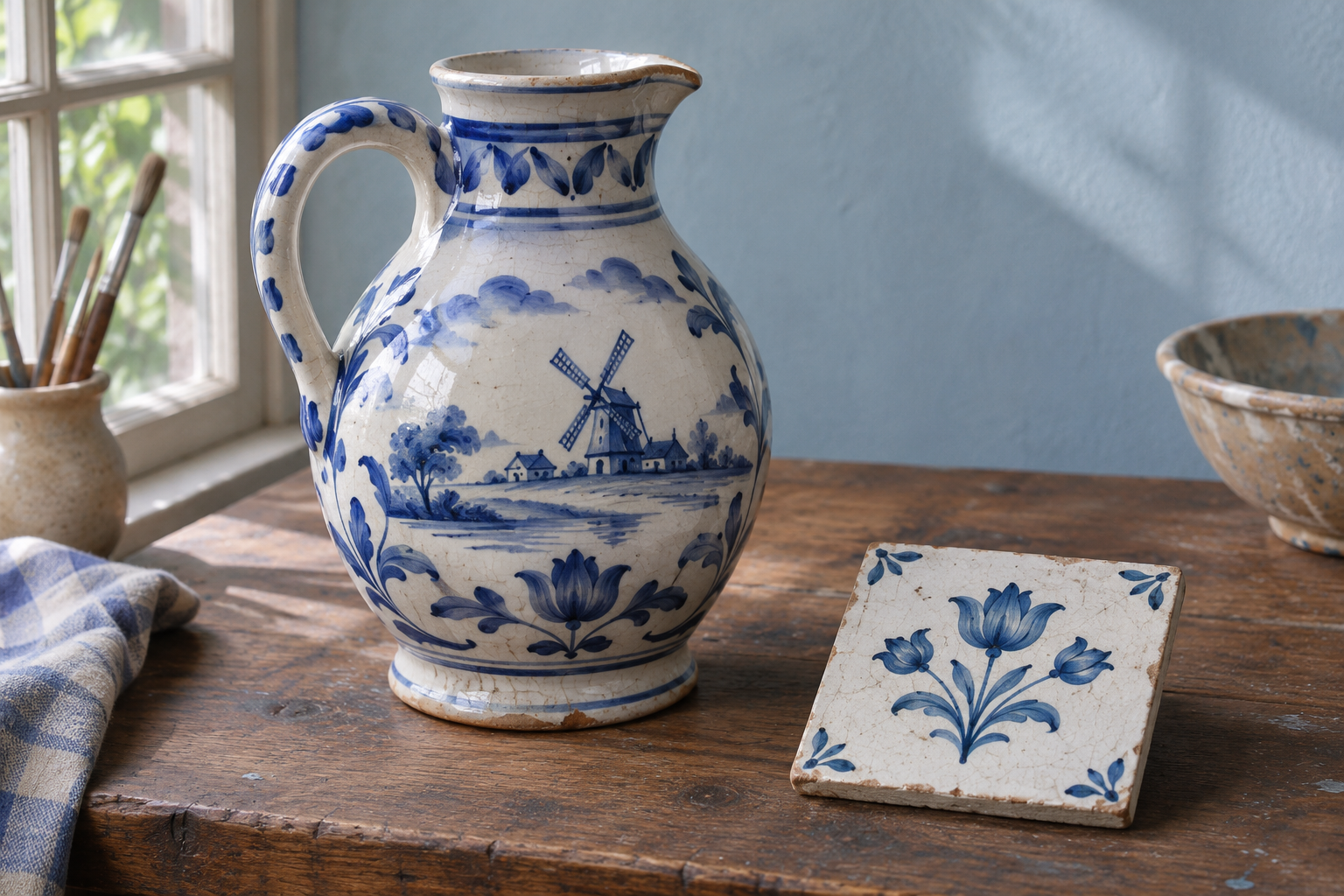
Delftware connects the city of Delft with a wider history of ceramics. It is tin-glazed earthenware, and blue-and-white decoration is its most familiar appearance. The category is broader than the souvenir windmill that often represents it. A vessel’s shape, its surface and its decoration all offer clues. A blue pattern alone cannot establish age, maker or authenticity.
Look closely at a single object
Start with the outline. Is a handle practical, decorative or both? Follow one painted line and notice whether it is quick, thick or carefully repeated. Then compare the surface around the painted motif. This exercise helps you look at an object as something made by a sequence of decisions, rather than as a flat pattern. Do not handle objects in a shop or museum without permission.
Connect the workshop with the town
A ceramics stop can give a day in Delft a focus beyond its best-known views. Compare what a workshop or museum explains with the objects you later see in windows. Ask whether an item is a contemporary piece, a reproduction or a historic object. Do not assume that everything sold in Delft was made there. For purchases, rely on the seller’s clear description and provenance rather than a travel blog.
Where the story continues
The Rijksmuseum holds a collection of Delft earthenware, so a visit can extend the subject from town to museum. Its online collection is also useful for comparing shapes and decoration before travelling. Collection membership does not mean an object is currently on display. Check the museum’s object record and current access information for any piece you specifically want to see.