Windmills and the landscape made around water
A Dutch horizon makes more sense when you look below it.
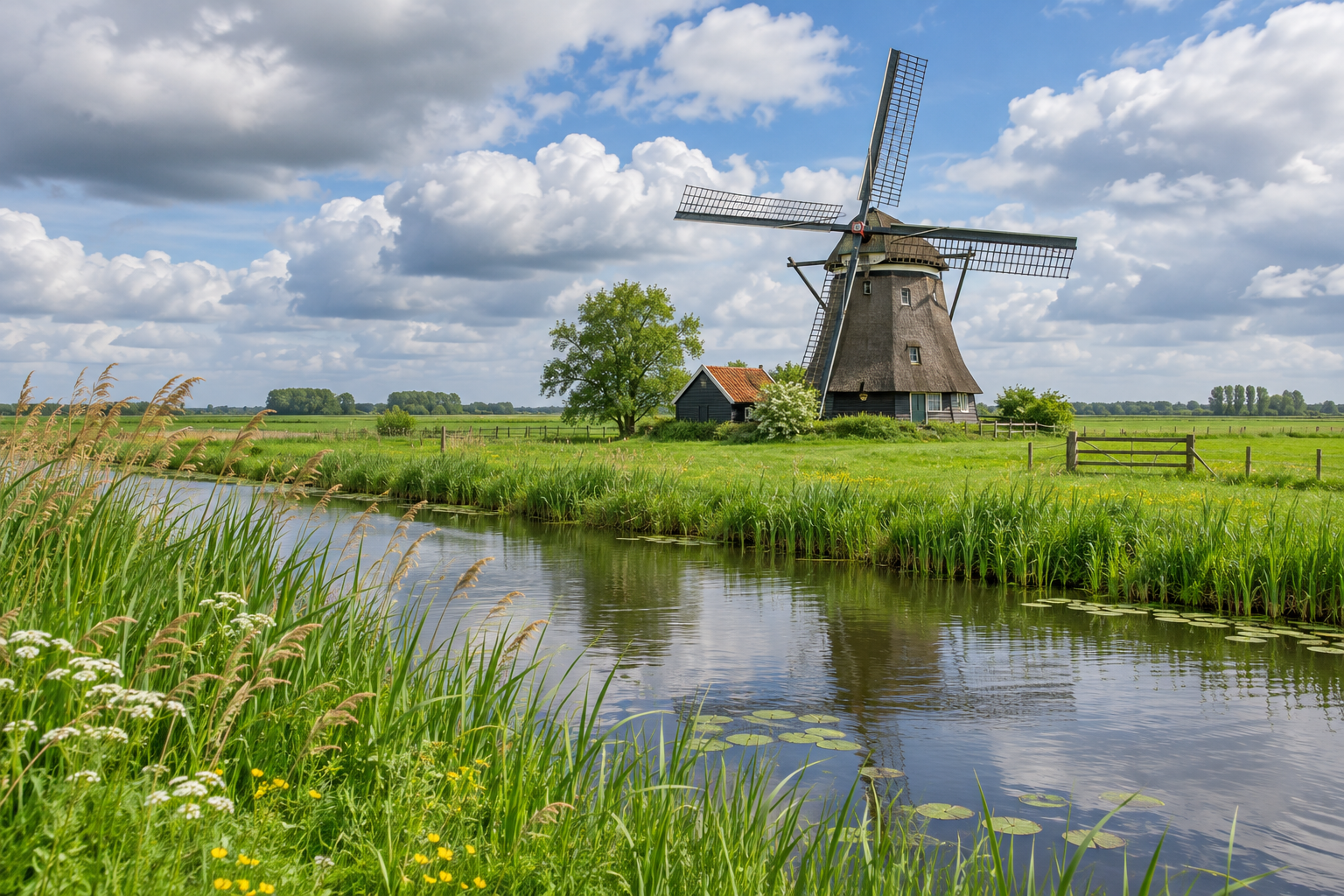
More than a picturesque skyline
A windmill can be part of a working system rather than an isolated landmark. At Kinderdijk, drainage channels, dykes, pumping installations and mills form a landscape shaped around water management. UNESCO recognises the ensemble for this relationship. Looking only at the sails misses much of the story beneath them.
Read the foreground
Before taking a wide photograph, look for the direction of the water, the height of a bank and the connection between channels. Compare the open view with the routes people use to cross it. The apparent simplicity of a flat landscape often comes from a complex history of maintenance and engineering. Not every Dutch windmill had the same function, so use the explanation at the specific site you visit.
Plan for an exposed place
Open landscapes can feel different from a sheltered city street. Check weather, daylight and the site’s current visitor arrangements. Stay on public or designated paths and respect working structures. Make a short route your default, with an optional extension if conditions suit you. This article does not specify live transport, admission prices or access to mill interiors.
From landscape to painting
A Dutch landscape painting can prompt similar questions about water, sky and the placement of people. Explore landscape art in the Rijksmuseum’s collection, then compare what you noticed outdoors with the artist’s choices. A painting is a constructed image, so avoid using it as a precise technical map of a present-day site. Check current gallery information if a particular work matters to your visit.